


 The Mycare Team
Your Guide to Individualised Funding in New Zealand
 The Mycare Team : 8 June 2026
Individualised Funding in New Zealand A plain-English guide for people with disability, older adults and their families

The Sandwich Generation: How to Care for Your Kids and Your Parents Without Being the Filling
It's 7.30am. One child can't find a school shoe, Mum has rung to say the specialist appointment has moved to Thursday and you're trying to remember whether you replied to that work email. Sound familiar?
If so, you're probably part of what's often called the sandwich generation: adults looking after children and an ageing parent or parents at the same time, usually while holding down a job as well. You are the filling, and it can feel like the bread is getting thinner from both sides.
Most people in this position don't think of themselves as carers. They just think of themselves as busy, a bit tired and doing what families do. Giving that experience a name is useful, because it tells you two things: you're not the only one, and what you're feeling is not a personal failing.
There isn't a tidy New Zealand count of how many people are caring for children and parents at once. What we do know is that about 430,000 New Zealanders, roughly one in ten, gave unpaid care to someone at the 2018 Census, and Carers NZ believes the real figure is higher because many people never describe themselves as carers.
The sandwich tends to catch people in their 40s, 50s and early 60s, and it's often women who carry the biggest share. It can also stretch on for years. Caring for a parent through a slow decline might overlap with the teenage years, a mortgage, a career at its busiest and, for some, grandchildren on the way.
Not every sandwich carer lives around the corner, either. Plenty are doing it from across town or across the country, mostly by phone, and worrying about the things they can't see.

A few things have shifted. Many of us are living longer, which is wonderful, but it means our parents may need support for much more of their later life. Many of us are also having children later, so the years when kids need us most can land right when our parents start needing us too. And with housing costs what they are, plenty of young adults are staying home longer than their parents did.
In many families, there's also an unspoken expectation about who will step in. For lots of Māori, Pacific, Asian and Pākehā whānau alike, looking after our elders is simply what you do. That sense of duty is a wonderful thing, but it can make it hard to say out loud that you're stretched.
Parents can make the conversation harder still. Many of the generation we're caring for grew up being self-reliant and don't like to ask for help. Their children aren't always sure how to raise it without sounding bossy, or as if they're eyeing up the house. So everyone tiptoes round it until something forces the issue, like a fall or a hospital stay.
When we asked one daughter how help began for her dad, the answer wasn't a care plan. It was dinner.
Her mum had died. Mum had done a great deal around the house, and without her there were gaps in what Dad could do for himself. His daughter lived too far away to drop a meal round each night, and she worried he was living on freezer food. So the first thing she went looking for was someone to cook.
"The more I thought about it, the more I was inventing jobs in my head that they could help with," she says. "I just felt like we needed more help, but in a flexible way."
She never looked into funding. There was no diagnosis, so she assumed nothing would be available or easy to get. That's a common assumption, and it's worth testing. Your GP is a good place to ask what support might be available, even if nothing has been diagnosed.
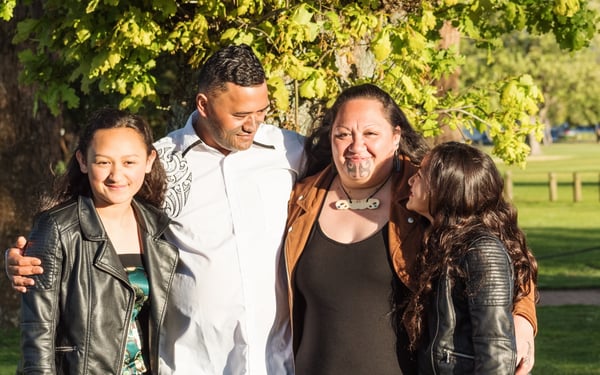
Then there's the logistics. Netball practice clashes with the physio. The school concert lands on the same day as the GP visit. Your own life, including exercise, friends and sleep, slowly becomes the thing that gets rescheduled.
Work often pays the price too. Many people end up reducing hours, turning down opportunities or leaving a job altogether. If you've been doing that, you're in good company, but it's worth knowing there's more support available than most people realise (more on that below).
Feeling overwhelmed in the middle of all this is normal. A few emotions come up again and again for sandwich carers.
The first is the role swap. You're now the one making decisions, booking appointments and checking if Dad has eaten, and he may not love it. You can offer help and encourage, but you can't make the choices for him. The daughter we spoke to had a list of things she hoped her dad's support worker would get him to do. Over time, she learned that what he chose to do with that time mattered more. "As long as everyone's happy and safe," she says, "throw my list out the window."
The second is grieving early. You might feel sad about losses that haven't quite happened yet, like Mum not being as sharp as she was or the two of you no longer doing the things you used to. Your parent is probably feeling something similar.
The third is the frustration and guilt loop. You get cross because yet another request has landed on top of a full day, and then you feel awful for being cross. Round and round it goes.
The fourth is the comparison trap. Everyone else on social media seems to have it together, with the immaculate lunchboxes and the cheerful family visits to Nana. They don't. Behind most of those photos is someone who is just as tired as you are.
None of this means you're doing it wrong. These are very normal responses to a very big job.

There's no single fix, but small changes at a few different levels can take real weight off.
For you: accepting help is not giving up. It's what makes it possible to keep going. Look for a carer support group, in person or online, where people get it without needing the backstory. Carers NZ is a good first stop, with a free helpline on 0800 777 797, a Guide for Carers and planning tools for taking a proper break.
For your family: start the care conversation with what your parent enjoys, not what they can no longer do. Talk about the garden, the weekly coffee or getting to bowls, and work back from there. Better still, start it before you need to. We plan for babies and careers, so the daughter we spoke to wondered why we don't do the same for getting older. "It's like a transition plan, and it doesn't have to be dark," she says. "What if it could be light?" Ask what matters to your parent, where they'd like to live and what kind of help they'd welcome, while there's still time to listen.
Share the load with siblings, even the ones who live far away. They can often take on the phone calls, the paperwork or the online banking. Keep talking with your partner and kids too, and stay flexible, because plans will change.
At work: you have the right to ask for flexible working from your first day, and caring is a valid reason. Put it in writing, and your employer has to consider it and reply within one month. Examples include reduced hours, swapping days or working from home. You can also use your sick leave to look after a dependant, such as an elderly parent, who is sick or injured.
In your community: local organisations, community groups and your GP practice can often point you towards services and programmes you didn't know existed, including respite options. Don't forget the places your parent already goes. The bowls club, the RSA, church or the regular coffee group often notice when something is off before you do. One dad we heard about goes to his club every day. "If he didn't show up one day," his daughter says, "they'd notice first." Make sure someone there knows how to reach you.
For the day to day: bring in someone who can share the practical load. This is where Mycare comes in.
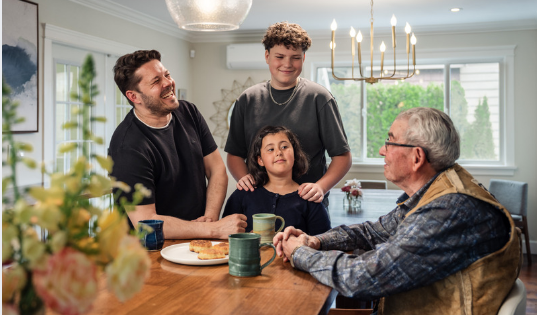
Mycare lets you find and choose a support worker for your mum or dad yourself. You can look at profiles, interview people and pick someone who suits your parent's personality, not just their care needs.
That matters more than it sounds. If your parent is already unsure about having help, the first person through the door carries the whole idea. "If you're already on the back foot with it and you get the wrong match, the whole thing's gone," says the daughter we spoke to. Before Mycare, she tried a service that wanted fixed days and a contract before it had even found someone to send. "It felt more like a commercial agreement than a person-to-person support model." Her dad wasn't keen on help to begin with, so she walked away.
On Mycare, you meet the person before you commit, and the two of you agree when visits happen, working around appointments and the rest of life.
Support can start small. A few hours a week for company, meals, a shower or a lift to appointments can take a surprising amount off your plate, and it can grow as your parent's needs change. Respite care means you can also take a proper break without worrying about whether Dad is okay. Visit tracking and messaging mean you're not left guessing how things went while you were at work or at the kids' sports day.
Because visits and payments go through the platform, there's a clear record too. That helps if you're looking after a parent's money and want to be able to show siblings, or anyone else, that everything is above board.
Over time, the best arrangements become something you couldn't have written in a job ad. "What I described and what it became weren't the same thing," the daughter says of her dad's support worker. "It wasn't wrong. The person shaped the role." She could always tell when the support worker had been. "He'd sound different after she came. I could hear it in his voice."
"When our mother needed help, Mycare was there. We appreciated how transparent the finances were, and we liked that we could interview carers before making a decision. Every aspect of the service was great." Dawn McCallum, Mycare organiser

Looking after children and parents at once is one of the hardest things a family can do. It's also a sign of how much you care. You can honour both generations and still keep something back for yourself, and getting a bit of support is how you do it.
The right support gives your parent something too, and it's easy to underestimate what. On paper, the job the daughter we spoke to advertised was meals and a few practical things around the house. What her dad got was someone who came to know him. His support worker didn't argue when he pushed back on the idea of help, and she didn't rush him. She let him set the pace, and over time they found the things they had in common. He no longer had to explain himself, and he began looking forward to her visits.
That's the part of care no task list captures. Being known, being listened to and having someone to look forward to matter to a person's wellbeing as much as a hot meal does. Care kept at arm's length, with a different face each week and conversation kept strictly to the job, can tick every box and still leave someone feeling like a name on a roster.
Her dad turned 90 recently. His support worker hasn't been paid to visit him for some time, because she has a full-time job now. A few days before his birthday she went to see him anyway, and wrote him a card.
Nobody puts that in a job description. It's what can happen when you choose the person, not just the service, and give the relationship time to grow.
If you're feeling the squeeze, we can help. Signing up to Mycare is free, and most organisers have their account set up and their first job posted in about 10 minutes.
Head to mycare.co.nz to browse support workers in your area, or get in touch with our team at hello@mycare.co.nz or 09 887 9777 if you'd like a hand working out what support would help most.

The Mycare Team : 8 June 2026
Individualised Funding in New Zealand A plain-English guide for people with disability, older adults and their families
The Mycare Team : 30 September 2026
Finding the right care worker really comes down to two things: whether they can do what is needed, and whether you or your family member will feel...

The Mycare Team : 18 September 2026
Ask most New Zealanders over 50 where they would rather grow older and the answer is overwhelmingly the same: at home. The New Zealand Seniors...