

Staying safe online doesn't have to be complicated - here's what matters most
Whether you are a Care Organiser or a Mycare Worker, staying safe online is part of staying safe full stop. This article covers the practical steps...
3 min read
The Mycare Team
:
18 September 2026
Ask most New Zealanders over 50 where they would rather grow older and the answer is overwhelmingly the same: at home. The New Zealand Seniors Quality of Life Report 2025 found nearly seven in ten of us want to receive care in our own home rather than in a facility. We want familiar surroundings; we want to still feel independent and we want to keep control over our own daily routine.
The wanting isn't the hard part, it’s usually the how that is challenging. For a lot of organisers, that's exactly where the right care worker comes in, not as a replacement for home, but as the thing that makes staying there possible.
There's a reason ageing in place is the preference for most people, not the exception. Home means your own bed, your own garden, the neighbour who waves every morning, the routine you've built over decades. For someone living with memory loss in particular, familiar surroundings can be genuinely settling in a way a new environment rarely is. Staying home isn't just about comfort, it's about someone continuing to feel like themselves.
The same report found the two biggest worries about ageing in place are keeping up with home maintenance and general safety. That tracks with what we hear from organisers too. It's rarely one big thing that starts the search for support. It's a handful of smaller things: showering safely, remembering meals, getting to appointments, having company through a long afternoon. Individually manageable, together they add up to real risk and real worry for the people who love them.

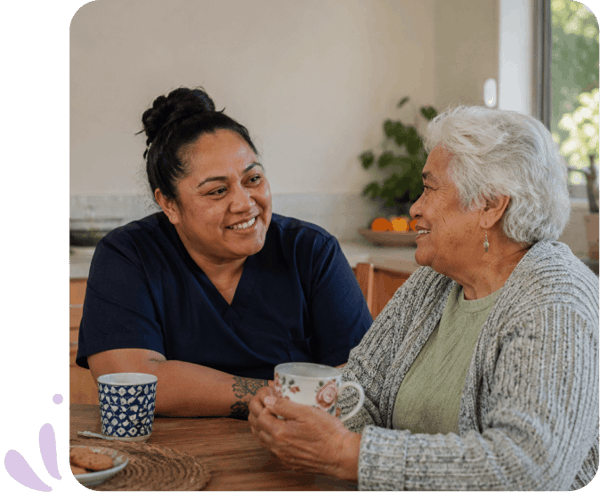
This is where the right person, doing the right things, changes the picture. A Mycare care worker can help with personal care like bathing and dressing, so dignity stays intact. They can help around the house with meals, laundry and light chores, so the home stays safe and manageable. They provide company, a familiar face for a cup of tea or a walk, which does as much for wellbeing as any of the practical tasks. And they can help with transport, so appointments and errands don't become the reason someone stops going out.
None of that requires leaving home. It just requires the right support to arrive there.
Continuity matters more than people expect, especially for someone whose needs are complex or who finds change unsettling. A rotating roster of agency staff means retelling your story and relearning routines every time someone new turns up. A care worker you've chosen and kept learns the small things that matter such as how your mother likes her tea, that your father gets anxious in the car, that the cat needs feeding first. Over time, that person becomes a genuine, trusted presence in your loved one's life, not just a name on a schedule.
"If there's any problem, I've got someone to back up."
- Lynette, 82, Mycare client, Auckland
Andrew, who arranges respite care for a family member in Auckland, told us something similar about what changes when the relationship is direct rather than managed by a third party.
"It took away the awkward element about money and payment, we could maintain that more personal relationship."
- Andrew, Mycare organiser
Independence and dignity come first. Choosing who helps with the most personal parts of daily life and having a say in how that support is delivered protects a person's sense of self in a way that being assigned a carer rarely does. Familiar surroundings reduce stress, particularly where memory or cognition is involved. The layout of a well-known home, the routine of a well-known day, does real, beneficial work that no facility can fully replicate.
Company matters just as much as care. Loneliness is one of the quieter risks of ageing at home alone and a regular, familiar carer often becomes as much a companion as a support worker.
Flexibility means support can grow as needs grow. A few hours a week can become daily visits, and daily visits can become overnight care, all without the all or nothing decision that a facility move usually represents.
Family peace of mind comes from visibility. Visit tracking, messaging and a clear digital contract mean organisers aren't left guessing what happened during a visit or wondering if everything agreed upon is actually happening.
And often, it's simply more affordable. Because you agree the rate directly with your care worker and pay a transparent Mycare 10% platform fee rather than funding an agency's overheads, home support can stretch further, giving families more time before a bigger decision needs to be made.

Ageing in place isn't about ignoring changing needs, it's about meeting them at home for as long as that's genuinely safe and right. Nationally, the average age of someone entering residential care is 85, and fewer than 5% of over 65s live in a care facility at any given time. Needs change gradually for most people, and Mycare's flexibility means support can scale with them, from a few hours of companionship to full daily care, without forcing an earlier move than necessary.
"When our mother needed help, Mycare was there. We appreciated how transparent the finances were, and we liked that we could interview carers before making a decision. Every aspect of the service was great."
- Dawn McCallum, Mycare organiser
If your family member wants to stay in the home they love, the right carer might be exactly what makes that possible. Signing up is free, and most organisers have their account set up and their first job posted in about 10 minutes.
Head to mycare.co.nz to browse care workers in your area or get in touch with our team at hello@mycare.co.nz or just call us on 09 887 9777 if you'd like a hand working out what support would help most.
Whether you are a Care Organiser or a Mycare Worker, staying safe online is part of staying safe full stop. This article covers the practical steps...

Building a small team of support workers, so you always have backup. A plain guide for people who arrange their own support, and for their whānau.
More and more Kiwis are choosing in-home elder care — and it’s not hard to see why. Staying at home offers comfort, independence, and a sense of...