


 The Mycare Team
Talking with your parents about help at home
 The Mycare Team : 5 August 2026
How to start the conversation, work through the hard feelings and keep going when it doesn't go to plan

Building a small team of support workers, so you always have backup. A plain guide for people who arrange their own support, and for their whānau.
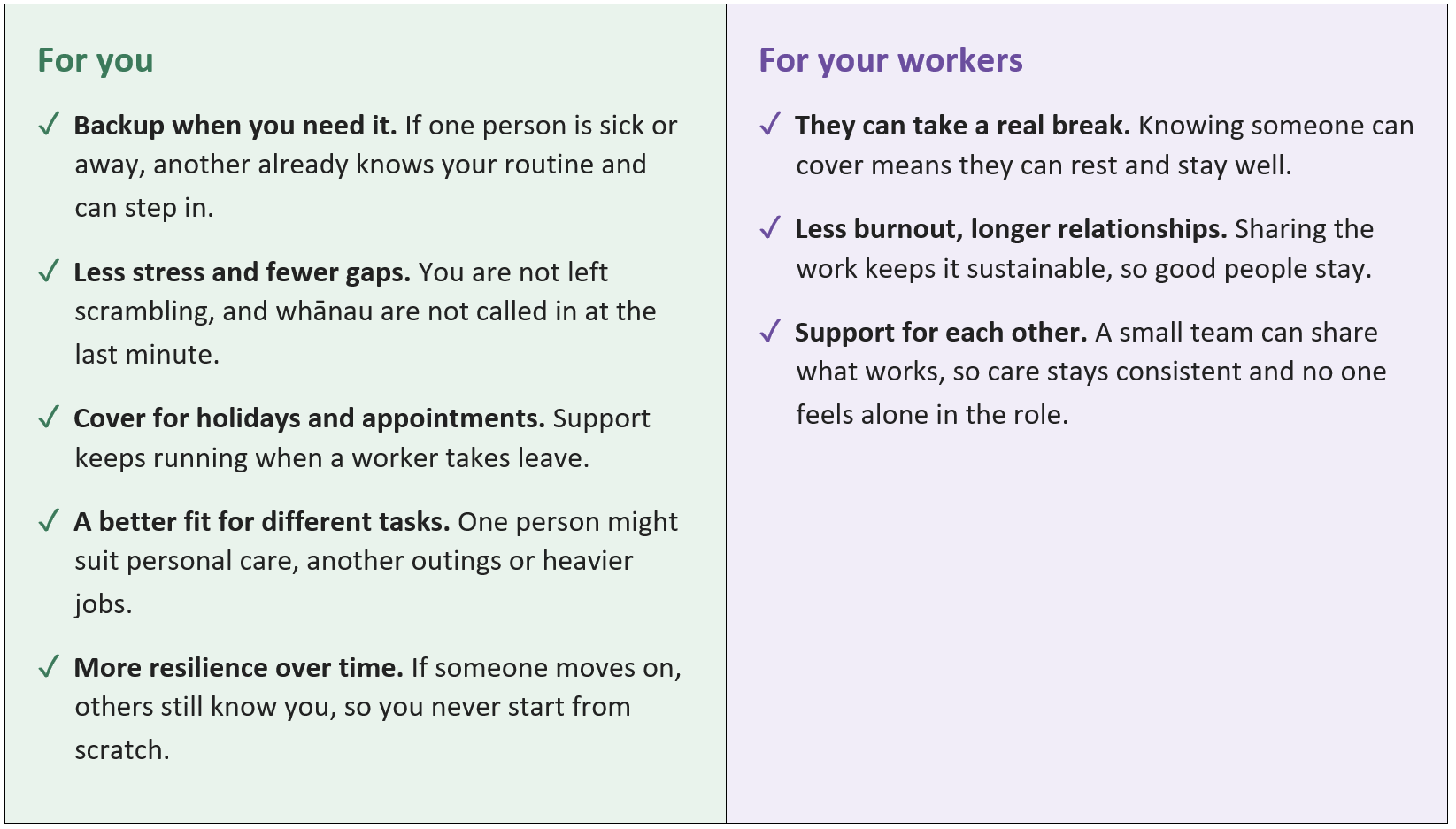
Having one wonderful support worker can feel like the whole problem is solved. Until the morning they text to say they are unwell, or their car will not start, or they need time off for their own family. Suddenly the support you rely on is not there, and there is no one to step in.
This guide is about a simple idea that makes life steadier: instead of relying on one person, you build up a small group of two or three trusted workers who know you and can cover for each other. It explains why this helps, what it can look like, and how to set it up at a pace that suits you.
Why one worker is not enough
When everything rests on one person, their day off becomes your problem. A single sick day can mean a missed shower, a missed appointment, or a family member having to drop everything to fill the gap. Over time that pressure can wear down both you and the worker you depend on.
It is not a fault in the worker. It is simply what happens when there is no backup. A small team spreads the load, so no single absence leaves you stuck, and no single person carries the weight of never being able to be unwell.
ONE THING TO REMEMBER
One worker can be a single point of failure. Two or three trusted workers give you cover, continuity, and peace of mind. That is the whole idea: everything else is just how to get there.
The benefits of a small team
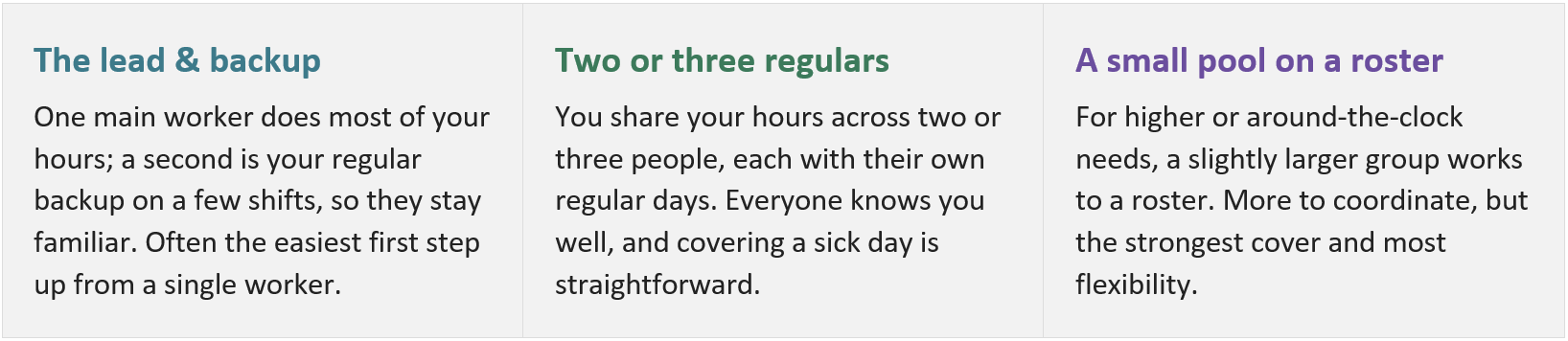
What a small team can look like
There is no single right shape. Pick the model that matches how much support you use and how much you want to coordinate.
FAMILY AND HIRED WORKERS, SIDE BY SIDE
A whānau member and one or two hired workers can sit in the same small team. The aim is the same: no single person carries all of it, and there is always someone who can step in.

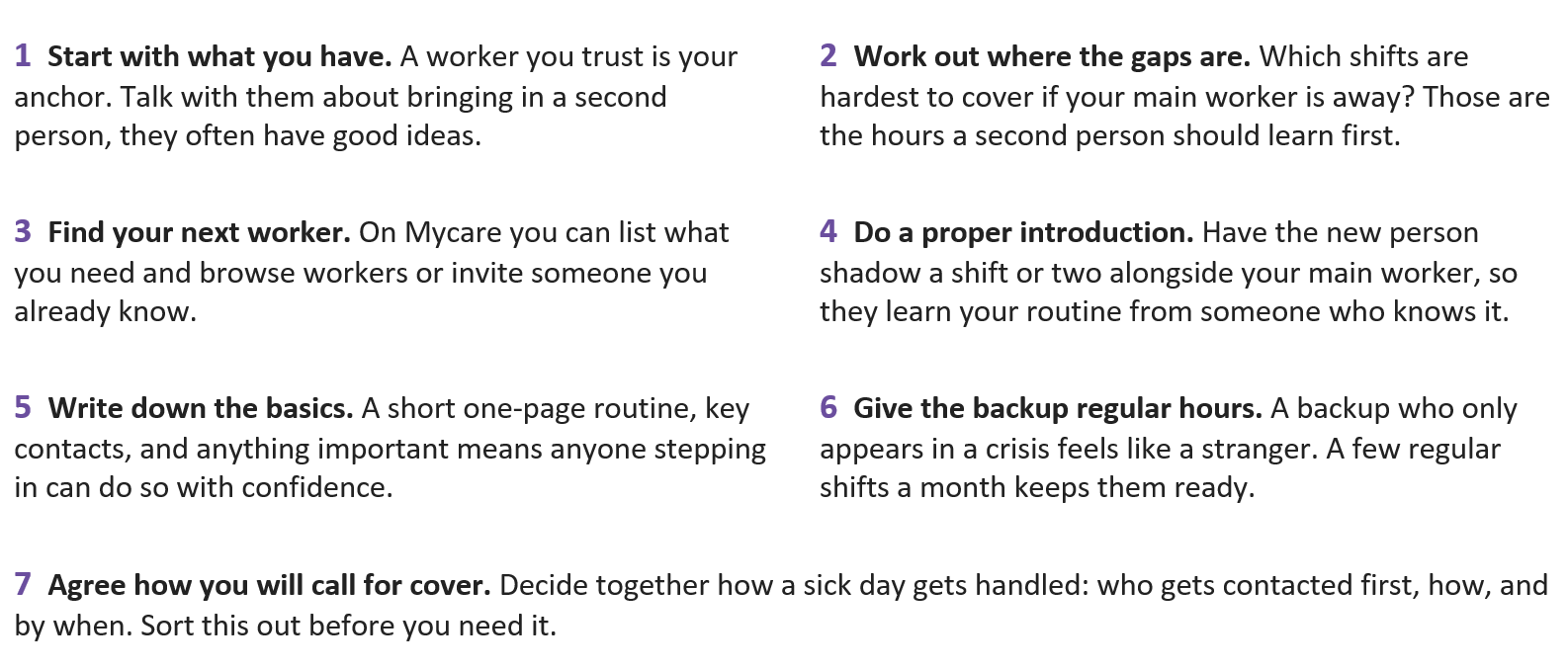
Building your team, step by step
You do not have to do this all at once. Add one person at a time, and let the team grow as your confidence grows.
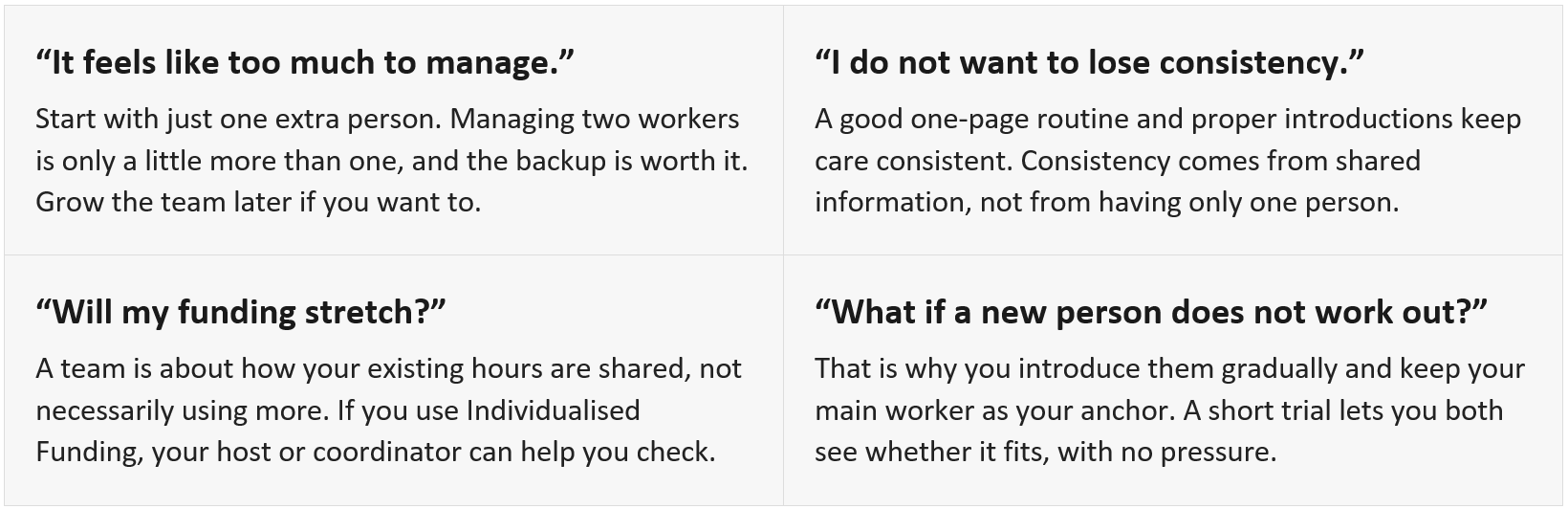
Common worries, handled
A simple way to start this month - your first three steps
1. Pick the one or two shifts that would hurt most if your main worker was away
2. Talk with your current worker, or list on Mycare, to find one back up for those shifts
3. Book a couple of overlap shifts and write your one-page routine while you are at it
Those three steps are enough to move from relying on one person to having real backup. Once it is working, you can decide whether to add a third. Small steps, steady support.
This guide offers general ideas to help you plan your support. For advice about funding and arrangements, talk with your support coordinator or funding host.
We're here to help, give us a call on +64 9 887 9777 or email us if you have any questions.

The Mycare Team : 5 August 2026
How to start the conversation, work through the hard feelings and keep going when it doesn't go to plan

The Mycare Team : 30 September 2026
Finding the right care worker really comes down to two things: whether they can do what is needed, and whether you or your family member will feel...
The Mycare Team : 19 June 2025
Finding the right support for her neurodivergent son When Emma moved to Cambridge with her 12-year-old son, she left behind more than just a familiar...